
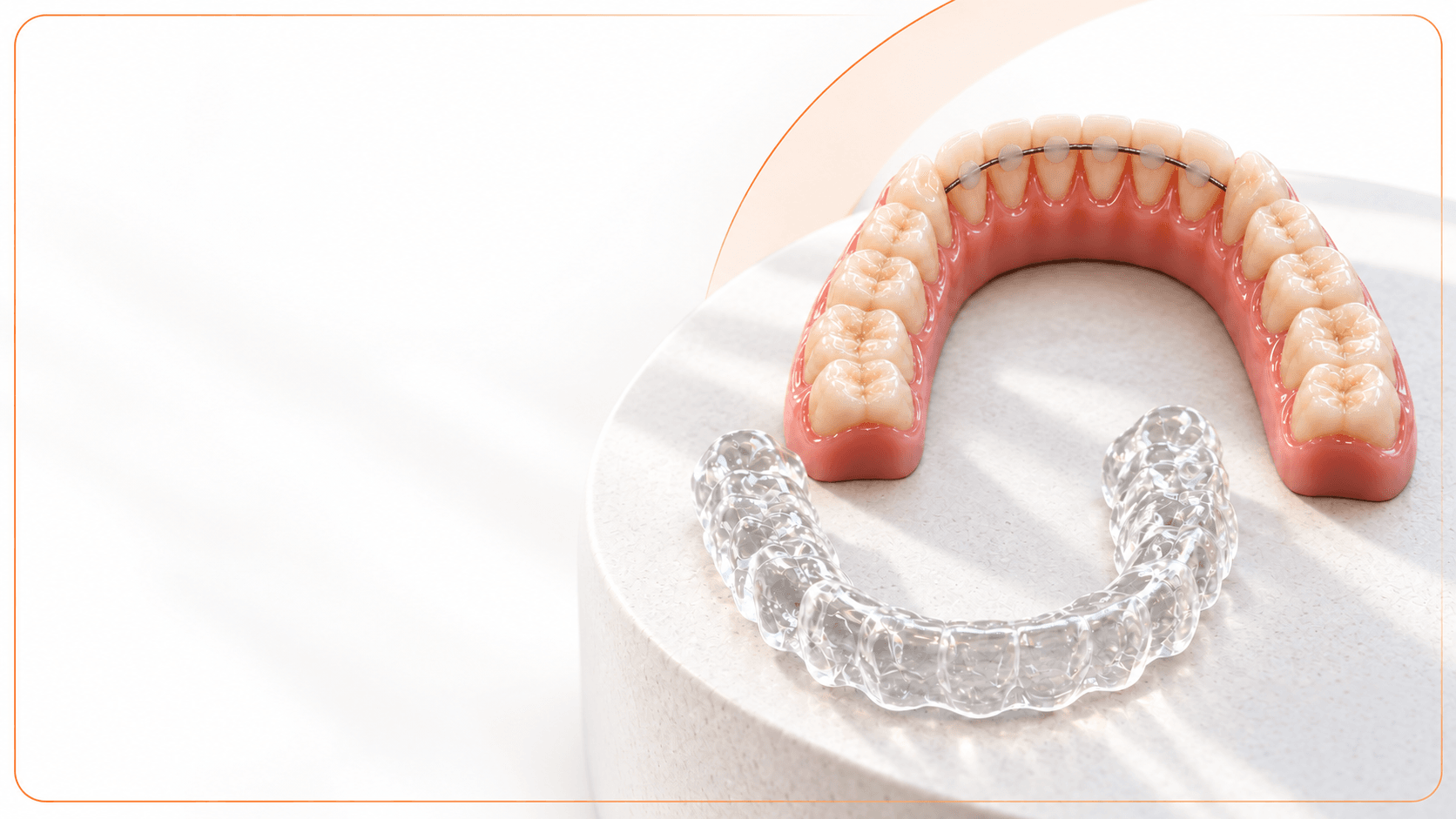
Why Retention Decides Whether an Aligner Case Succeeds
A clear aligner case can finish beautifully and still be judged a failure a year later. Teeth that have just been moved sit in bone and soft tissue that are still adapting, and without support they tend to drift back toward where they started. The American Association of Orthodontists (AAO) explains that retainers exist to keep teeth in their straightened position after treatment, and states that a retainer is necessary for a lifetime, though how often it is worn may decrease over time.
For practices and DSOs, that makes retention a clinical issue and a business one. Relapse means unhappy patients, unplanned refinement requests and remakes that eat into margins. It also affects how patients talk about aligner treatment to friends and online. Much of the work that protects the result happens during planning, which is why we cover it alongside reducing clear aligner refinements and careful attachment, IPR and staging decisions.
- Plan for lifetime retention. Professional guidance treats retention as long term, with wear frequency tapering rather than stopping.
- The evidence has gaps. Systematic reviews have not found high-quality evidence that one retention method is best for every patient.
- Match the retainer to the case. Relapse risk, hygiene, compliance and patient preference should drive the choice.
- Build it into the workflow. Final scans, delivery timing and review appointments should be scheduled, not improvised.
What the Evidence Says About Retention
Retention research is less settled than many clinicians expect. A Cochrane systematic review (2016 update) analysed 15 trials with 1,722 participants and concluded there was insufficient high-quality evidence to recommend one retention procedure over another. The same review found no evidence that wearing thermoplastic retainers full-time gave greater stability than part-time wear, although only a small number of participants were studied on that question.
A 2023 systematic review in Applied Sciences that looked at 34 studies reported that both fixed and removable retention devices have proven valuable. It noted that fixed retainers tended to offer more reliable long-term stability but need regular checks, while removable retainers depend heavily on patient compliance.
It is also worth remembering that most retention research was carried out on patients treated with fixed braces. Aligner patients arrive at the retention phase with different habits: they are used to wearing removable trays most of the day, they are used to digital check-ins, and they often expect a quick, low-visit experience. Those habits can make removable retention easier to adopt, but they can also create a false sense that treatment is "over" once the last aligner comes out. Clear communication at the handover appointment helps close that gap.
Two practical lessons follow. First, there is room for clinical judgment, so protocols should be documented and applied consistently across providers. Second, whatever retainer you choose, patient compliance and regular review do much of the work.
Fixed vs Removable Retainers After Aligners
The AAO describes three main retainer types: Hawley (wire and acrylic) retainers, clear removable retainers, and fixed bonded retainers. After aligner treatment, most patients are already used to wearing clear trays, so clear removable retainers are a natural fit, but they are not the only option.
Swipe to compare all columns →
| Retainer type | Strengths | Watch-outs |
|---|---|---|
| Clear removable (vacuum-formed) | Discreet, familiar to aligner patients, easy to make from a final scan, covers all teeth in the arch | Relies on the patient wearing it; can wear, crack or be lost; needs periodic replacement |
| Fixed bonded wire | Works without daily patient effort; often chosen where relapse risk in the anterior segment is high | Harder to clean around; bond or wire failures can go unnoticed without regular reviews |
| Hawley (wire and acrylic) | Durable, adjustable, allows some settling of the bite | More visible; some patients find it bulkier and less comfortable |
| Combination (fixed + removable) | Adds a backup layer of retention for higher-risk cases | More hygiene demands and more appointments to maintain |
How to Choose a Retention Protocol for Each Case
Because no single method has been shown to be best for everyone, a short checklist at the planning stage helps the team make a consistent decision and explain it to the patient.
- What moved, and how far? Cases with large rotations, closed spaces or significant anterior crowding correction usually deserve a more cautious retention plan than mild alignment cases.
- How good is the patient's compliance history? Aligner wear data and check-in history are a useful guide to how reliably they will wear a removable retainer.
- Can they keep a fixed retainer clean? Periodontal status and daily hygiene habits matter before bonding a wire.
- What does the patient prefer? A plan the patient agrees with is more likely to be followed.
- Who will monitor it? DSOs in particular should agree who owns retainer reviews across locations.
For group practices and DSOs, turn this checklist into a short form attached to every case. It makes decisions consistent across providers, gives new clinicians a clear starting point, and creates a record you can review if a patient later reports relapse.
Setting wear schedules
Wear schedules vary between clinicians, and the Cochrane review did not find evidence that full-time wear of thermoplastic retainers outperforms part-time wear. What matters most is that the schedule is written down, explained clearly and reinforced at reviews. Whatever the starting schedule, patients should understand that night-time wear continues long term, in line with AAO guidance that retention is lifelong.
Talking about retention with patients
Frame the retainer as part of the result, not an extra. Show the cost of replacement retainers upfront, explain what relapse looks like, and tell patients to contact the practice as soon as a retainer feels tight, cracks or goes missing.
Common Retention Problems and How to Handle Them
Even well-planned cases run into retention problems. Having a standard response for each one keeps small issues from turning into full retreatment.
The retainer feels tight after a few missed nights
A tight retainer is often the first sign that teeth have started to move. Advise the patient to return to more frequent wear and book a check. If the retainer no longer seats fully, do not ask the patient to force it; take a new scan and assess whether minor movement needs correcting before a new retainer is made.
The retainer is cracked, warped or lost
Clear retainers wear over time and can warp if exposed to heat. The AAO advises patients to avoid hot water and to keep a retainer in its case whenever it is not being worn. Keeping the final scan on file lets you order a replacement quickly, which limits the time the patient goes without retention.
A bonded wire has come loose
Partial debonds are easy for patients to miss, and teeth can shift around a loose section. Teach patients to run their tongue along the wire and report anything that feels different, and check bonded retainers at every review.
Minor relapse has already happened
When small changes have occurred, the options range from simply resuming wear to a short course of additional aligners. Assess the change against the original setup, discuss the options with the patient, and then restart retention from the corrected position with a clear wear schedule.
Hygiene around retainers
Retainers need daily cleaning just like aligners. The AAO recommends gentle daily brushing with soft bristles and regular soaking in a cleaning solution. For fixed wires, show patients how to floss around them, and check the gum tissue at reviews.
A Step-by-Step Retention Workflow for Aligner Cases
The best-retained cases follow a predictable sequence. Here is a workflow that fits most general practices and DSOs.
- 1. Decide at treatment planningRecord the intended retainer type and wear schedule when you approve the 3D treatment setup, so it is part of the plan rather than a last-minute decision.
- 2. Confirm the finish before the final scanCheck the bite, contacts and any remaining spaces. Resolve small issues first; retaining an unfinished result locks in the problem.
- 3. Take a clean final scanA high-quality intraoral scan or impression is the basis for accurate retainers, so follow the same file standards you use for new cases.
- 4. Deliver retainers without a gapTime retainer delivery so the patient moves straight from the last aligner to the retainer, with no unsupported days in between.
- 5. Schedule reviewsBook follow-up visits to check fit, wear, bonded wires and early signs of relapse, and keep the patient's scan on file for fast replacements.
Want fewer surprises at the end of treatment?
Our treatment planning team can help you plan finishes and retention from the first setup.
[email protected]How Clear Moves Supports Stable Aligner Results
Stable results start with a well-planned finish. Our treatment planning workflow takes cases from STL to final staging with the finish in mind, and our doctor portal keeps setups, approvals and case notes, including your retention plan, in one place. Every case goes through our manufacturing quality control process, so the aligners you deliver match the plan you approved.
Ready to build retention into every case? Contact our team to discuss your cases and how we can support your practice or DSO.
Frequently Asked Questions
How long should patients wear retainers after clear aligner treatment?
Is a fixed or removable retainer better after aligners?
Do clear retainers need to be worn full-time at first?
Can a patient use their last aligner as a retainer?
When should the retention plan be decided?
How often should retainers be checked?
Worldwide